
The Endgame
Newsletter #136 - To the point of failure

Toronto, July 12, 2026
To the point of failure
“That’s it,” I told Kaitlin, my physiotherapist. “I can’t do any more. I’m through.” I was on my third set of ten beginner push-ups. I had done nine, got almost to the end of the set—only one more to go—but I couldn’t finish. My triceps and shoulders wouldn’t cooperate.
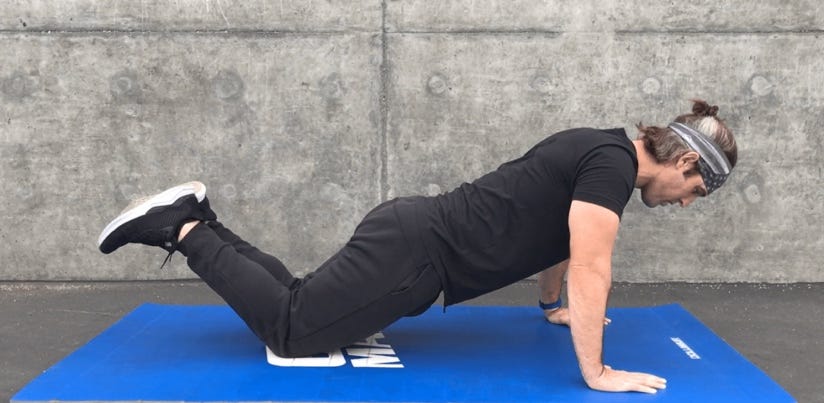
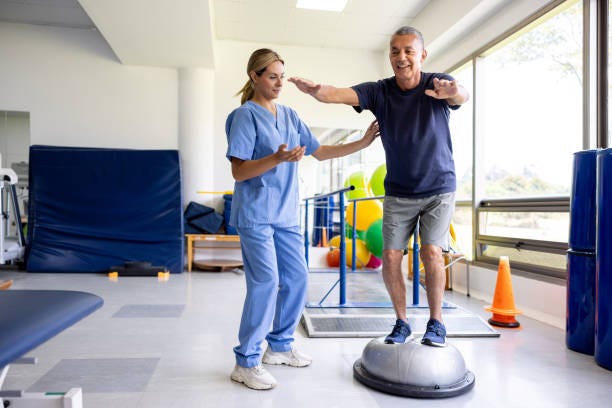
Since I was diagnosed with Parkinson’s Disease more than a year ago, I have followed a rigorous physical fitness program. I don’t enjoy it, but it’s my way of fighting back. Part of my program is working with Kaitlin twice a week for an hour. She supervises a variety of exercises intended to build strength and improve balance. Kaitlin believes in “progression”—making it tougher and tougher as we go along. “You’re not here to relax,” she says. “You’re here to get to the point of failure.” The point of failure is when you reach the limit of what you can do.
I have a lot of respect for Kaitlin. She clearly knows what she’s doing. But the point of failure concept strikes me as odd, a paradox, something like “it’s only good for you if you can’t do it anymore.” It reminds me of the Peter Principle, named after the Canadian management theorist Laurence Peter. He wrote, “In a hierarchy, employees tend to be promoted based on their success in their current job until they reach a position in which they are no longer competent.” The Peter Principle is sometimes used to explain why everything is a mess. The world is run by people who don’t know what they’re doing. They’ve gone beyond the limit of what they can do.
Maybe the progress of civilization depends on pushing good things (leaving aside the definition of “good thing”) to the point of failure. Take a good thing as far as it can go—space exploration, medical research, technology, peace studies, exercise, you name it. Push it to the point of failure. But don’t try and take it further than that, not today, because if you try you will trip over the Peter Principle and stumble into a world of incompetence. Wait for tomorrow. Maybe you can take it further tomorrow. We call that progress.
For an old person like me, competing with yourself is one of the few kinds of competition left. Chances are you’re not struggling in the marketplace any more. You’re not trying to scramble up the career ladder. You’ve given up trying to get on the best-seller list. What’s left? Striving to improve yourself in whatever way you can, that’s what’s left. The last push-up, that’s what’s left.

Pushing to the point of failure, competing with yourself, is part of personal maintenance, the subject of my last Endgame. A new and excellent book, How We Disappear by Thomas Mullaney (best known for his book on the history of the Chinese typewriter), has something tangential to say about all this. Mullaney is interested in the effects of entropy, particularly on personal information. (Entropy: The natural tendency of systems to degrade or fall apart if no outside energy or active maintenance is put into them.) Mullaney writes: “No orderly thing... stays in order... Rot, rust, ruin, erosion, estrangement, alienation, extinction, language death, senescence, obsolescence, collapse, galaxy quenching. Kaleidoscopic are the avatars of entropy.” In my Endgame about maintenance, I mentioned Stuart Brand’s rant against the “chaos of rust.” Here we have Mullaney’s reference to rot as an avatar of entropy.
The human body, an orderly thing, is, like everything else, subject to entropy. It degrades or falls apart in the absence of energy or maintenance. Eventually, it will fall apart, regardless. It will rust and rot. In the meantime, push to the point of failure. Do one last push-up.
*****
Some reader comments on Endgame 135 (“M&A” – maintenance and administration)
From David Wolinsky: “I think it’s sweet that you still think you’re governed by M&A. Trust me, at this stage of the game M&A no longer applies. It’s SG, POP, and HFTGR—super glue to hold the disintegrating parts together, plethora of pills to ease the pain, and hiding from the grim reaper. But hey, I guess hope springs eternal, even if the springs are shot.”
Naomi Duguid comments: “Terrific summary of the invasion of M&A as we age. It gobbles our time, and tries to take over our thoughts too. And it’s not very interesting...”
John Gregory writes: “I asked the Sandra Schamas question of a colleague of mine who retired before I did. His answer: I get up in the morning with nothing to do, and when I go to bed at night, I’ve done about half of it. The classic comment on the Slayton version of M&A was ‘if I had known I was going to live this long, I would have taken better care of myself.’ And the cynic’s take on the next generation: grandchildren are your reward for not having killed your children.”
My nephew Allan Kissack writes from Grantham, birthplace of Margaret Thatcher: “Ah, M&A… Although not at the all-day stage, we have certainly found our retirement maintenance takes up a big chunk of the morning if we are at home. Add to that the familiarity of ‘the routine’ and this means that doing anything else, or different, in the morning can be a bit of a burden; to make up for that we try to seek maximum enjoyment in life from lunchtime onwards and accept the mornings for what they are.”
I hear again from Julian Porter, my severest critic: “What a truly odd column! Not much sweeping fuzzy thoughts, although I’ve met Schamas who was dancing poetry and sly wit.
I prefer your usual lofty columns whispering intellectual scope, not Merck Manual of Diagnosis and Therapy.”
From Akekho Umumto: “Having reached ‘old age,’ I do regular things to maintain. One is to sit still and shut up. Then notice. Another is to exercise. I do more exercise now than I did as a teen. Having survived open heart surgery, 3 cancer surgeries, 2 strokes to the eye, I know how the story ends. I always tell my friends, I don’t want to ruin the plot but no one makes it out alive. I told my cardiologist about the running that I’m doing and he said it was amazing. I told him the good thing is that I’m smart enough to realize that I can’t outrun aging, sickness, and death. Maintenance is essential. But so is acceptance. All things fall apart. Balance is key.”
The last word goes to Shady Maples: “I remember an Army base doctor giving a medical brief: ‘Men in their twenties want to get big, men in their thirties want to get strong, men in their forties want to stay strong, but men in their fifties just want to get out of bed without pain.’ His point was train smart and don’t over-do it for ego, because the bill comes later.”
*****
Interesting.
Because my father had PD for over 45 years and having several friends who've been diagnosed with it in recent years, I follow thevarious foundations and research diligently. Two activitiess repeatedly recommended, as helpful re Parkinson's, are boxing and dancing. I can see you enjoying and excelling at both. Throwing well aimed punches and moving to music seem like Philip friendly activities. Give it a whirl.
I am devestated……your columns were sparkle,fizz,giggles,startling erudition.A flow of intellectual oxygen which pumped me for the week.
I did notice your picture of the failed pushup revealed a much younger man.
By the way what were you doing,you turkey,a pushup????
Since my recent health adventures has driven me happily to T.S.Eliot poems of profound gloom,I am mentally prepared for your decision
But I will always cherish your columns
In tears
Julian