
The Endgame
Newsletter #133 - Reputation

Toronto, May 31, 2026
Reputation
“Reputation, reputation, reputation! O, I have lost my reputation! I have lost the immortal part of myself, and what remains is bestial.” Thus speaks Iago in Act 3, Scene 3 of Shakespeare’s Othello. Most people don’t regard their reputation as immortal and what remains as bestial, but they do care what people think about them. Should they? And what is “reputation?” It’s a slippery concept. (By the way, don’t trust Iago. Samuel Taylor Coleridge said he exhibited “motiveless malignity.”)
Acquiring a good reputation is tedious and can take a lifetime. The best way to do it is with long stretches of non-controversial behaviour regarded favourably by those who matter. Don’t rub important people up the wrong way. If you have acquired a good reputation and want to hang on to it, be careful. Don’t offer strong opinions on tricky topics. Don’t sully the record with personal behaviour out of tune with censorious times.
Some people follow a different path. They want a reputation as a troublemaker. They do not seek to please. Others repudiate the reputation game altogether. Those people refuse to let others define them: They will not try to become what others believe them to be. Some accept the need to be trusted and respected—otherwise how can you be effective in society—but do not care whether they are liked or admired.

Can we trust what we see and what we are told? Tawdry truth may lurk behind shiny appearance. The Guardian newspaper recently reported that Jonathan Carley, 65, was fined by a magistrate’s court for wearing a fake uniform meant to resemble that of a Royal Navy admiral. Carley wore it to a Remembrance Sunday event held in Wales. The judge told him, “You were there not as a genuine person, but as someone who came to deceive.” Reported the newspaper: “Carley had attended the event in a uniform he later told police had been legitimately issued to him as a cadet years ago, but that he had customised it with medals bought online and rear admiral rings he had paid a tailor to add.” Carley’s lawyer told the court that his client “wanted to be a part of the proceedings.” Most people want to be part of the proceedings. Like a fake Admiral’s uniform, a good reputation, legitimate or not, may help you join up.
Good reputations have a momentum of their own, an internal logic that may not correspond to reality. Once, in England, I was invited to a reception where everyone attending wore formal dress. I chatted with a military man in an army dress uniform which included a row of miniature medals strung across his chest. Having had one sherry too many, I enquired, “How did you get all those medals?” He pointed to the first one, and said indulgently, “I got the first one by mistake, and I got all of the rest because I got the first.” Was apparent heroism just an illusion?

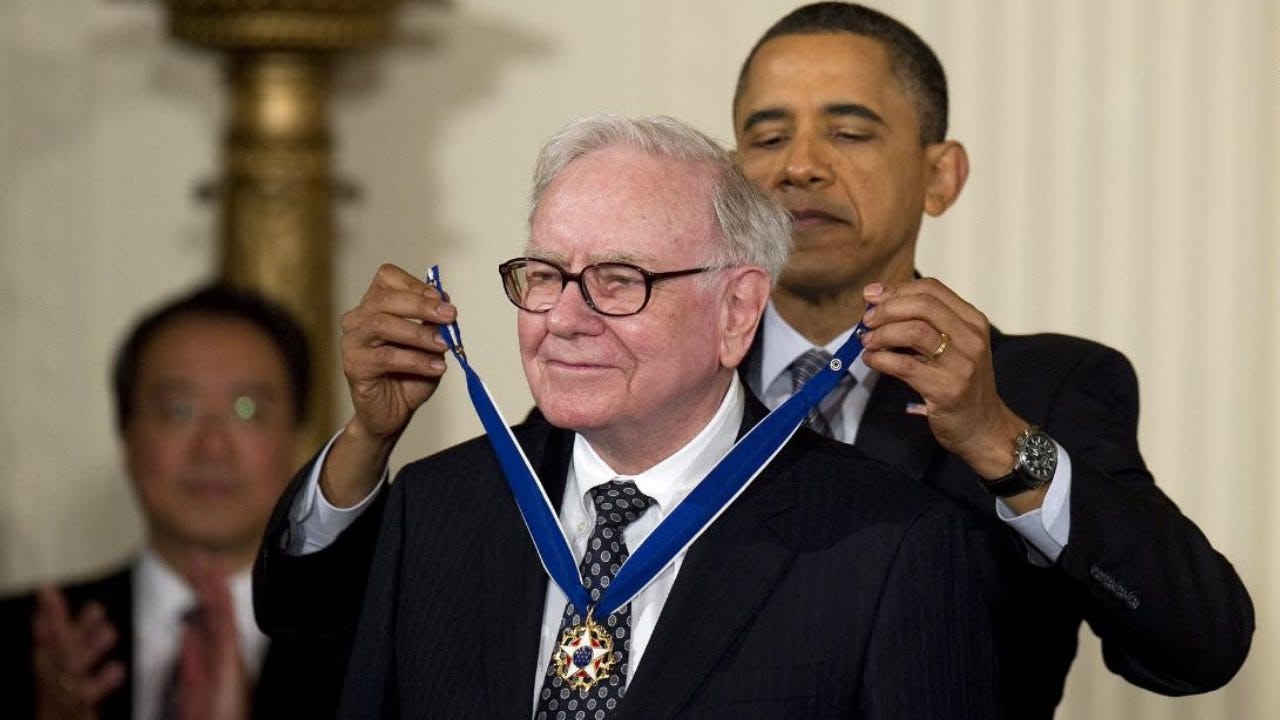
No matter how acquired, a good reputation can disappear in a puff of smoke. Warren Buffet, the Sage of Omaha and a man of impeccable repute, said, “It takes 20 years to build a reputation and five minutes to ruin it.” He failed to mention that you might not be responsible for ruining your reputation. Someone else, Iago-like, might do it for you. They may act out of malice or motiveless malignity, possibly for tactical advantage, maybe just for fun. You might be the victim of gossip, an unfounded rumour or a false allegation. A social media campaign may be the agent of your destruction. The history books and newspapers are full of examples.
Reputations are ruined all the time, sometimes with justice and reason, sometimes not. It happens everywhere, every day. The victim must crawl away and lick his wounds, whether ruination was deserved or not.
*****
A few reader comments on Endgame #132 (“A diagnosis”)
(A number of readers wrote offering support and encouragement following my diagnosis of Parkinson’s Disease, and I am grateful for that. There was broad agreement that you should not keep it a secret when you are diagnosed with a serious illness.)
Wise words from the psychiatrist David Goldbloom: “Illness and identity is a huge issue, not only for patients but also for docs. Medical trainees were admonished by their staff physicians for referring on rounds to ‘the lung cancer in room 12’ or ‘the congestive heart failure in ER,’ as opposed to the person with those problems. And medical sociologists in the last century wrote about ‘the sick role’ where, for some patients, illness becomes identity. Finding the sweet spot between the extremes of denial and defeat is the challenge, but generally it’s harder to keep a secret than to share the truth. And other people, noticing symptoms, may be left to their own fantasies about what is actually going on. I watched one of my Cape Breton uncles cope with Parkinsonism over 25 years. He claimed it improved his golf game by slowing down his backswing—true to his character. We bring our unique trajectories and temperaments to the templates of disease, leading to the variety of illness experience.”
From Faye Jones: “We debated sharing [my husband] Dereck’s diagnosis for all the reasons you describe. But we decided that we could trust those that love us and that they would want/expect to know so they could support us. Yes it changed how a few friends treated us but that price was worth having the love and support and understanding of the many.”
Janet Price has a question: “I have thought about how I would/will handle receiving a major diagnosis such as Parkinson’s. Will I tell people? How to have this knowledge and not have that become my identity?”
Liz Thompson sends good wishes: “I hope your friends, colleagues, and relatives continue to support and encourage you, and your post describing what has happened is not only entirely frank and honest, but a wonderful example of telling people you have never met exactly what you have and are experiencing now.”
The final word goes to Virginia Brown writing from Istanbul: “Sorry about your diagnosis. That’s why I don’t go to the doctor—the label thing. Plus, if they look, they will find... I’m sure I am a walking bucket of disease.”
my reputation recedes me.
…..should have added that the importance of reputation in the legal profession confirms the stereotype of the pompous lawyer 🧐