

Toronto, October 25, 2026
Back to the ship!
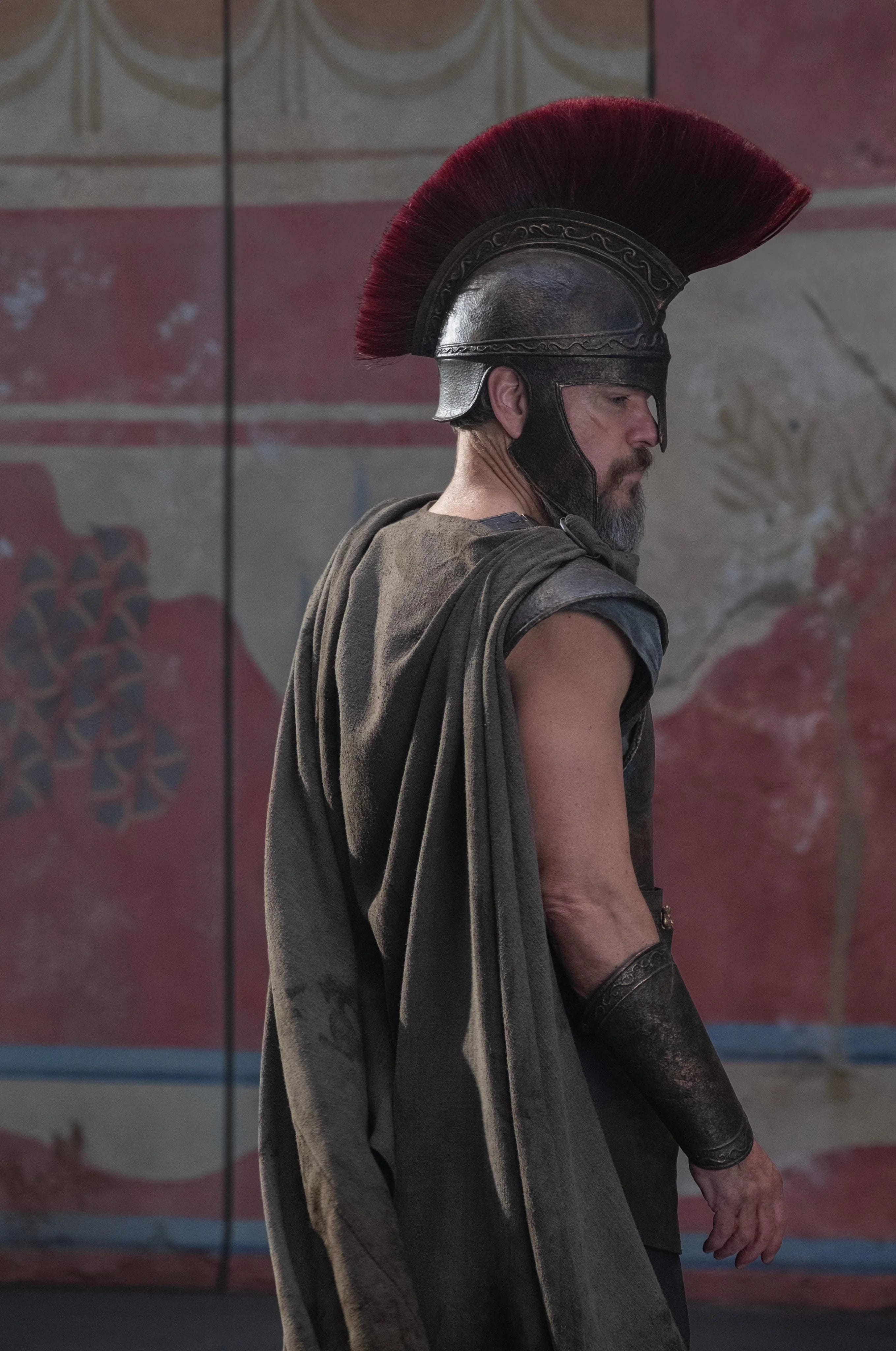
Recently I took my 14-year-old granddaughter and a friend of hers to see The Odyssey, a movie based on the epic poem by Homer (c. 8th century BCE). Improbably, it stars Matt Damon as Odysseus. Much of the film is about the 10-year journey of Odysseus and his men from Troy to Ithaca by sea. One line from the movie has become part of our family lexicon: “Back to the ship!”
Odysseus issues this command repeatedly to his crew. As the sailors on their long journey land here and there, seeking water and provisions, they are regularly set upon by grotesque and violent monsters. “Back to the ship!” shouts Odysseus when things turn bad. The men run back to the ship. Not all of them make it.
This brings me (quite naturally, I think) to Aristotle (384–322 BCE). (Ancient Greeks are having a moment at the minute.) Here is Rembrandt’s famous 1653 painting Aristotle Contemplating a Bust of Homer:
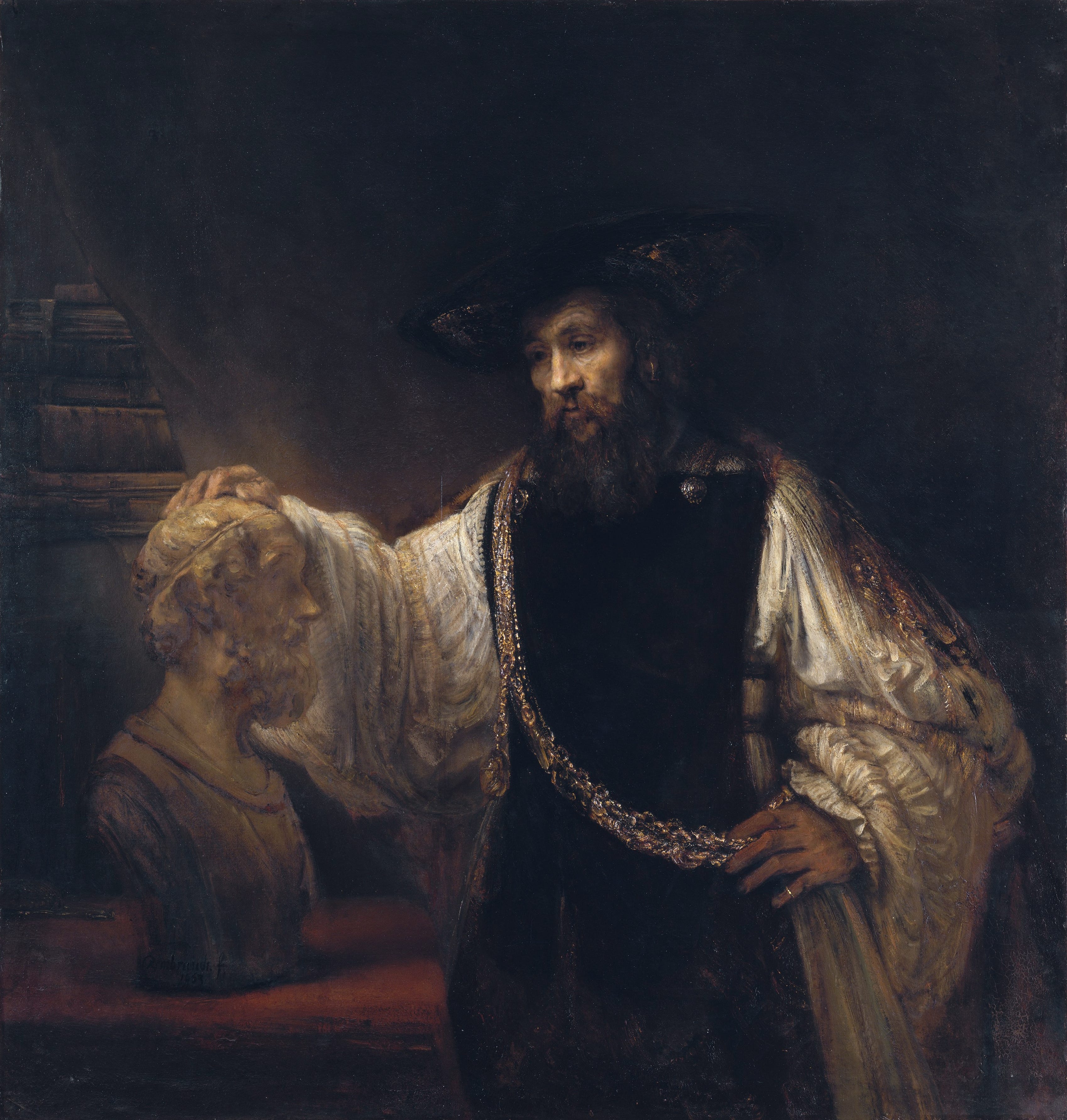
The painting hangs in New York’s Metropolitan Museum of Art. The museum note accompanying the canvas says it “conveys Rembrandt’s meditation on the meaning of fame... Aristotle wears a gold medallion... perhaps the philosopher is weighing his own worldly success against Homer’s timeless achievement...”
When it comes to the meaning of old age, Aristotle’s meditations are not pleasant. In his Rhetoric (Book II, chapter 13) he describes elderly men this way: “They live by memory rather than by hope; for what is left to them of life is but little as compared with the long past; and hope is of the future, memory of the past.” He elucidates: “[T]hey have often been taken in, and often made mistakes; and life on the whole is a bad business. The result is that they are sure about nothing... They are cynical... Further, their experience makes them distrustful... They are small-minded, because they have been humbled by life ...They are cowardly, and are always anticipating danger... They lack confidence in the future; partly through experience—for most things go wrong, or anyhow turn out worse than one expects...”
Thanks a lot, Aristotle! Who do you think you are?
Aristotle was taught by Plato (428—348 BCE) and the two men were friends (for what that was worth—in the Nicomachean Ethics Aristotle writes, “while both are dear, piety requires us to honour truth above our friends.”) Plato has a sunnier view of old age than his student and (when truth permitted) friend. In The Republic (Book I, Part 3), he has the elderly Cephalus tell Socrates: “Men of my age flock together; we are birds of a feather, as the old proverb says; and at our meetings the complaint of my acquaintances commonly is, ‘I cannot eat, I cannot drink; the pleasures of youth and love are fled away; there was a good time once, but now that is gone, and life is no longer life...’” But Cephalus continues encouragingly: “The truth is, Socrates, that these regrets... are to be attributed to the same cause, which is not old age, but men’s characters and tempers; for he who is of a calm and happy nature will hardly feel the pressure of age, but to him who is of an opposite disposition youth and age are equally a burden.”
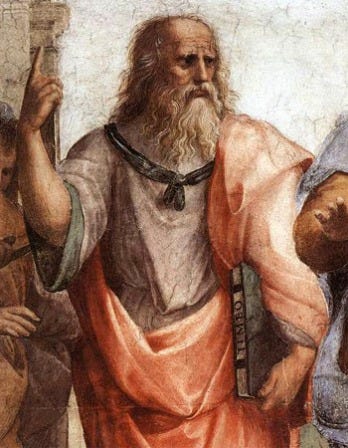
“He who is of a calm and happy nature will hardly feel the pressure of age,” says Cephalus. That’s a lot more upbeat than Aristotle’s “live by memory rather than by hope.” Thanks, Plato! I’m definitely a Plato man: forget Aristotle. Although some might say I lack a calm and happy nature…
But, we should remember, there’s always a last resort. Back to the ship!
*****
A handful of comments on Endgame Essay #141 (“The rules of engagement”)
Someone known as The Firepit writes: “The case for staying engaged is right, but it is not really an endgame discipline: it is generativity itself, the refusal to withdraw from a future you will not live to see. That choice is not reserved for old age—it is the choice every civilization makes or refuses at every age...”
From my severest critic, Julian Porter: “Lingering luncheons! First such a lingering lunch presents a slew of what you can’t eat. Too much salt, no shell fish and then the furosimide signal of oh my God I have to piss now…. too late! And who will pay? Do you dare reveal the conversation stopper of your lower regions? But yes, I would love to have a lingering lunch with you but let us avoid Trump.”
From Naomi Duguid, creator of the excellent Substack “Home & Elsewhere”: “Wonderfully concise, thank-you: ‘the slowly enveloping cloak of invisibility’ and unarguable. This question of limited time, of allocating it mindfully, is a place my mind goes too often. It’s aggravating that I spend/waste time thinking about my lack of it, rather than generating new ideas or doing something fun or constructive.”
Janet Price comments: “It is so helpful and important to dig down into broad statements to wonder about it in its complexity—like oldish people needing to be social beings. I appreciate you sharing your own wonderings about this—that we need to be seen, always throughout life. But especially important as the cloak of invisibility covers more and more of us, to be able to disagree, agree, even be clueless at times, as we determine what, in our limited time left, is even valuable to ponder.”
Sandy Horodezky: “I had a friend who told me of a business acquaintance who had partnered with Wayne Gretzky to sell hockey equipment to the USA. My friend enquired whether this man experienced all the plane travel with long security lines, etc., tiring. The colleague replied, “Really, is that what happens when YOU fly?” He had never been on a commercial flight in his life. I suppose he’s never experienced the collywobbles of the ‘not-rich-enough’ class!”
Simon, known as The Worried Poet, writes: “Yes ‘there is not much time left.’ One becomes aware of such things and of change and changes to come... One finds oneself posting warnings for those who remain with an urgency arising from the awareness of how little time there is left. Seems that in these times all my poetry is warnings. As to the past ... well it’s always the eternal now but it’s not shadows around us, it’s other souls passing through, if one loves them the urge to leave something useful behind is very strong.”
Gabrielle: “‘The sharing of the human condition’ is one reason I enjoy being a sports fan. Sports fandom provides an easy, yet strong, connection to a large group. Funnily enough it is felt most profoundly when sharing misery even over joy.... Definitely about the human condition.”
Julius Grey comments from Montreal: “I think that we continue to engage in a vain attempt to vanquish the growing silence around us. As Dylan Thomas said, ‘wise men at their end know dark is right.’”
Alan Gratias: “My own approach to ageing gracefully is; live small, imagine big, find enchantment...”
And the last word goes to the wonderful and always surprising Virginia Brown: “Yeah, so, why don’t you write to me?”
*****
Some words I like
(with thanks to AI)
Stoush – “‘Stoush’ is an informal term, mainly used in Australian and New Zealand English, that means a fight, brawl, violent scuffle, or a heated verbal argument/disagreement. As a verb, it means to hit, punch, or engage in a fight or dispute. E.g., ‘They keep getting into drunken stoushes with each other in pub car parks.’”
Argy-bargy – “‘Argy-bargy’ is an informal British and Commonwealth term for a noisy, heated, yet usually minor argument or scuffle. It can function as a noun or a verb and often describes a rowdy verbal disagreement rather than a serious physical fight. Frequently used in sports, politics, or everyday neighbourhood disagreements (e.g., ‘There was a bit of argy-bargy on the pitch’ or ‘The neighbours had some argy-bargy over the fence’).” (Note: An argy-bargy could lead to a stoush.)
Namby-pamby – “‘Namby-pamby’ means weak, indecisive, overly sentimental, or lacking in character, strength, or firmness.” (Note: Someone who is namby-pamby is unlikely to engage in. an argy-bargy.)
I hope Plato is right and that I might come to fit his more positive outcome. It resonates with Erik Erikson's writings on the key challenge of each phase in our life cycle.--the issue in life's final stage being Integrity vs. Despair. Dylan Thomas' saying accords with Leonard Cohen, in his final album, You Want it Darker, saying: I am ready, my Lord.
I am definitely in Plato’s camp! If we can be positive now we are much more likely to be positive when old. Interesting comment about hope when old is not possible. I would say maybe thankfulness… in each moment, whatever our age. Because that IS what we have, each moment until the end. 😊